The Dramatic Space with Adam Wyeth
Info
Date: March 16, 2027
Time: 6.30 pm - 8.30 pm
Duration: 6 weeks
Level: Advanced | Intermediate |
Cost: €205 (€184 Members)
Location: In Person
This course will take place for six weeks in person on Tuesdays from 16 March 2027 (six sessions in total).
Course Summary
The Dramatic Space is a six-week practical workshop exploring dramatic writing across forms — primarily theatre, but also poetry, fiction, dramatic monologue, radio and screenwriting. Beginning with major playwrights from Shakespeare, Pinter and Beckett to Sarah Kane, Marina Carr and Martin Crimp, the course explores how writers create tension, character, voice, conflict, silence, image, desire and psychological depth. We will consider dramatic writing as a poetic space: a space created between writer, language and audience. The course asks not what the rules of drama are, but what makes writing dramatic — and how those discoveries can transform writing in any form.
Course Outline
The course consists of six two-hour workshops combining close reading, discussion, practical writing exercises, improvisational thinking and workshop development. Each week participants will generate new material to develop between sessions. (Please note that some exercises, texts and subjects may vary as the course develops, depending on the interests and needs of the group.)
Week 1 — The Dramatic Space: Room, Image, Atmosphere
Where does a piece of dramatic writing begin?
We begin with the room: space, atmosphere, objects, entrances, images and the first disturbance. Looking at Pinter, Beckett and Enda Walsh, we consider how a writer can create dramatic possibility before plot or explanation. Exercises explore the imagined room, the significant object and the moment when something changes.
Writing: participants produce a two-page opening beginning with space rather than exposition.
Week 2 — The Voice: Dialogue, Monologue and Subtext
What are characters really saying?
We explore dialogue as action, looking beneath spoken language to desire, fear, power and concealment. Pinter provides a central model, alongside Albee, Tennessee Williams, Arthur Miller and Yasmina Reza. We will also consider the dramatic monologue and how a single voice can create a theatrical space.
Exercises explore interruption, repetition, evasion, silence and the conversation underneath the conversation.
Writing: a short scene in which the most important thing is never directly said.
Week 3 — Shock, Mystery, Language and the Imagination
What does the audience know — and what does it imagine?
This week brings together psychological, political and poetic approaches to dramatic writing. We look at Sarah Kane, Caryl Churchill, Marina Carr, Martin Crimp, and David Ireland, exploring violence, taboo, absence, mystery, political language and the unseen event.
We ask how much a writer should reveal, and how language can create an imaginative world without explaining it. How can an image, a missing piece of information or a contradiction become more powerful than exposition? And what happens when the audience becomes a co-creator of the work?
Writing: participants create a scene in which something significant has happened but is never directly explained, using clues, images, contradictions and withheld information.
Week 4 — Breaking the Form: Silence, Fragmentation and the Poetic
What happens when we remove the rules?
Looking at Beckett, Ionesco, Genet, Fosse, Crimp and Kane, we explore repetition, silence, fragmentation, minimalism, absurdity and theatrical time. We consider how a piece can remain dramatically alive when conventional plot, exposition and even psychological certainty begin to disappear.
We will also return to the idea of the poetic shape of a play: rhythm, image, metaphor, pattern and the musical qualities of language.
Writing: participants experiment with repetition, absence and fragmentation, producing a short piece in which very little happens externally but something shifts internally.
Week 5 — Desire, Conflict and the Dramatic Event
What changes?
We return to the fundamental dramatic question: not simply What happens? but What changes? We examine desire, conflict, power and disturbance through writers including Pinter, Chekhov, Strindberg, Zeller, Reza and Marina Carr.
We consider the dramatic event as something that may be physical, psychological, emotional or entirely unseen. A change in knowledge, power, perception or desire can be as significant as an action on stage.
Writing: the “smallest possible play” — two people, one space, one object, one secret and one thing that changes.
Week 6 — The Unseen Event: Structure, Staging and the Writer’s Imagination
How do we make the audience enter the space?
The final week brings the ideas together and turns them towards participants’ own work. We look at openings, turning points, structure, staging and the relationship between what the writer provides and what the audience imagines.
Participants develop the opening of their own dramatic work, incorporating a specific space, a desire, something withheld, an image or object, a disturbance and a change in power or perception.
The final workshop becomes a space for sharing and responding to this work.
Writing: a developed 5–10 minute opening of an original dramatic piece, which may take the form of a play, monologue, short story, poem, radio piece or screenplay.
Course Outcomes
By the end of the course, participants will:
- develop a stronger understanding of what makes writing dramatic, across different literary forms;
- explore dramatic writing through the work of major playwrights and writers;
- understand how space, voice, silence, image, desire, conflict and disturbance generate dramatic energy;
- develop greater confidence with dialogue, monologue, subtext and character;
- explore psychological, political and poetic approaches to dramatic writing;
- experiment with minimal, fragmented and non-naturalistic forms;
- develop an understanding of how withholding information can activate the audience’s imagination;
- consider the relationship between dramatic writing and poetry, particularly rhythm, image, metaphor and the poetic shape of a work;
- produce and develop original dramatic writing during the six weeks;
- begin to identify their own dramatic instincts and methods rather than simply applying formulas or rules.
The course is not about teaching the rules of drama. It is about discovering what makes writing dramatic.
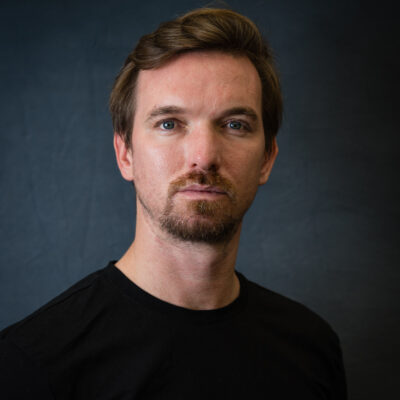
Adam Wyeth is an award-winning poet, playwright, and essayist, with five books published by Salmon Poetry. His work has been presented at the Dublin Theatre Festival, the National Concert Hall, and internationally. Adam is an experienced creative writing mentor and workshop facilitator, known for creating supportive, thoughtful spaces that encourage experimentation, critical engagement, and sustained creative practice. He reviews for the Irish Times.