06 October, 2026
Literary Journal Spotlight #6: The Storms
Below, the editor of The Storms tells us a little about the magazine, and you can read an extract!
What do you do when your debut poetry book is coming out but it’s Covid and lockdown, meaning you’ve all been locked out of the world?
The short answer is you listen to an insane middle-of-the-night, full-on panic attack idea and start a podcast, named after your poetry book, Eat the Storms, with the hope of getting not only your voice out there, but as many voices as possible in a time when we’re being told to keep as far apart as possible. A year later, in 2021, three seasons into the podcast, already featuring over 350 international guests, everyone asked what’s next and, eventually, you started to ask yourself the same thing.
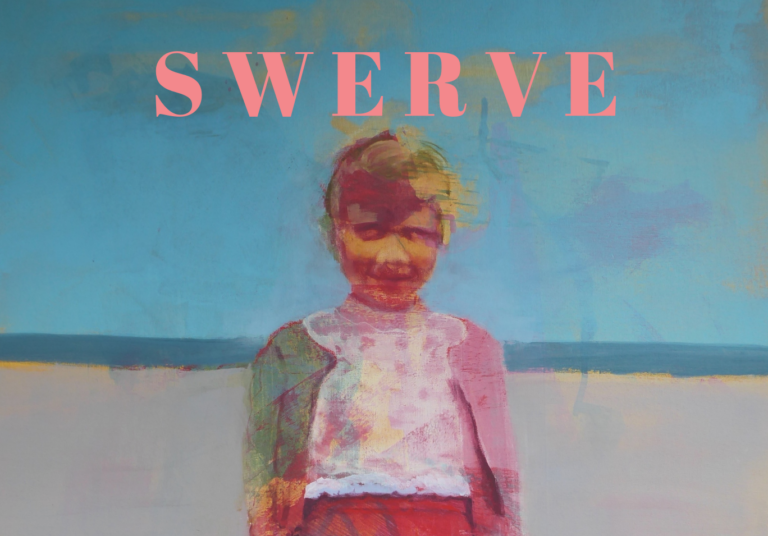
So fast forward to November 2025 and the launch of the 5th issue of The Storms, the printed journal of poetry, prose and visual art. The journal felt like the natural extension of the podcast, taking the words from the airwaves and putting them back onto pages, accompanied by short stories, flash fiction and visual art from around the world.
Supported originally by the Arts Council of Ireland and currently by Fingal Arts / Fingal County Council and Dublin UNESCO City of Literature / Dubin City Council, the journal has already featured over 400 contributors from the length and breadth of Ireland, the UK, most of Europe, USA, Canada, Australia, New Zealand and beyond, connecting creatives, communities and continuing to share voices, and now visions. With themed and non-themed issues, each one has its own arc, with poetry, prose, painting and photography folding itself into a cohesive collection, communicating from first page to last page, all curated by editor-in-chief, poet and podcaster from Lusk in Co. Dublin, Damien B. Donnelly who is joined by a different subeditor each issue to ensure a variety in the selection process where all submissions are judged blind, meaning the issue is often bursting with recognised names and award-winning writers sitting next to debutants taking their first trip into the community with us. The journal only exists because of its contributors, its Stormers, it is there solely to showcase their talents.
The 5th issue of The Storms opens with a contemplation on existence, the study of life in the poem, Ayurveda, by S. C. Flynn and what follows is, essentially, the essence of our limited days, our prints, paddings and percussions on this archipelago of the soul, while confronted by the gates of hell, that onslaught of voices rising from the amphitheatre of the damned. Along the way, we find ourselves in the company of gods, leaping from this mortal coil to bathe in the belly of the sanctuary, in myth, magic, as if the once mighty may offer us company, comfort, condolence from the cold hand of reality and its caged animals and the misunderstandings of those closest to us, who would know us so well, had we been born with their tongue and not with that of an alien. Throughout this storm, we are pulled to the water, away from the wild-fires, to the break of birth, the flotsam metamorphosis of hope, the shelter of boats, the murmurs of sand on shore and all the way to the tae and the lure of a consoling third pint in the hands of our featured prose writer, Seán McNicholl. When confronted by these apparently unending days of human against human, our attention is drawn, to the beasts who roamed before us and will reign again if our rage becomes our ruin. Hinting at that once infamous Ark viewed from the other angle, this 5th storm offers refuge to nature’s bounty, from its finest form to its collapse in our own hands, critiquing our own inability to permit ourselves to be anything other than oppressor. Here we find deer, whale, dolphin, fireflies, grasshoppers, gulls, cicadas, elephants, dogs, snakes, bees, oxen, herons, doves, minnows, ravens, horses hunting for their own survival while we hunt each other for bounty, blood and border.
Issue five subeditor, Dublin writer Rhona Greene, said, ‘we waited, Damien and I, as the storms raged, holding [our] symmetric breaths together, not knowing what would become of the dream we shared. We stood at the frayed edges of humanity, looking through wildfire, out to sea, and you came, over the horizon, one by one, in your canoes, your coracles, your frail vessels – a global flotilla carrying the song of the past, the song of now, and the unformed songs of endless years to come, and you magicked something strong inside [our] veins. [We] felt the water was writing to [us].’
The final words of this new issue are left with our featured poet, from Istanbul, Ozge Lena, and the tongue of the blue whale so huge that fifty humans could dance on it. On the surface of this world today, missiles splurge. Somewhere, in this journal, let these lines be the lexicon of community, creativity and a current of waves we can release, to diminish the screams, the surges, the moans.
It is said that before everything was the ocean.
The Storms is available to buy at https://eatthestorms.com/the-storm-shop/ and at bookshops around the country including Books Upstairs and The Winding Stair Bookshop in Dublin and Charlie Byrne’s Bookshop.
Things to Note about The Storms
We publish poetry, flash fiction, fiction, non-fiction, memoir, and all forms of visual art. We hold three launches, a live Dublin launch, usually in an historic building, a live international zoom launch and an audio companion to the journal on the podcast, Eat the Storms. We pay our artists based on the funding we receive. The journal is not for profit, but a celebration of creativity, collaboration and community. We promote our contributors across all our social media platforms and on the website. We do accept writing in languages other than English; however, they must be accompanied by English translations. We do not tolerate any form of racism or discrimination.
Extract: ‘Dublin, Near Bodies of Water’ by Joanne Hayden
Burrow Beach
My cousin and I write a poem in the sand about our gran who is looking on. Gran, Gran, where’s your frying pan? She has been minding us for over 24 hours and in that time we’ve tried to hoodwink her into eating potions made out of ketchup and shampoo, we’ve jumped on her bed, giggled during mass and set an alarm clock for midnight. We draw a cartoon of her beside the poem – huge curls, teeth and glasses – and walk with her back to her house on Howth Road where we pester her to play ‘When the Red, Red Robin Comes Bob, Bob, Bobbin’ Along’ on the piano, then take off down the garden, past the snapdragons and apple trees, to peer into the disintegrating caravan again, hoping and afraid that there, safe in the mildew and darkness, we’ll find Shergar, the kidnapped horse.
Howth Head
Assignation. The kind of word I like, literary and slightly obscure, but I’m not thinking about words or Molly Bloom, haven’t read Ulysses. We’re both seeing other people and, mostly, are careful about where we go. A summer evening. Midges. The sky clear over the bay. My dress clings to my body; I hate my body and at the same time want to show it off. I’m twenty-one, high on this movie version of my life and on being desired though what I desire is still a mystery to me. We kiss in the grass. His hand moves further up my thigh. I push it away. Rightness and wrongness. What if walkers come along? Plus I have my period and if his fingers continue they’ll touch a sanitary pad and blood.
Custom House Quay
We march towards the Custom House, same banners and chants as before but this feels different, the size and mood of the crowd, like a power has been unleashed and now is finally unstoppable. I think of my nine-year-old self, obsessed with Shergar, oblivious to the referendum later that year. In my late teens, I interviewed my gran, discovered bits about her life: she once played Buttons in a pantomime, she did Celtic Studies for a term in UCD, left when she passed the civil service exams. Before she married and had to give up her job, she worked in the Custom House. She never made it to Paris. She had beautiful long red hair and always thought of herself as a redhead, even after her hair went white. She would have voted for the amendment, would have disapproved of me in this crowd, crossing the Liffey, a spectacle, shouting, My Body, My Choice. In truth I don’t like shouting slogans or being part of any crowd but I can’t stay home and this time my discomfort is outweighed by a sense of hope. I’m surrounded by women much younger than me, determined to refuse the shame, to call it out for what it is and push it back where it belongs.
Baggot Street Bridge
Every day I bolt, leave behind the excruciations of homeschooling: celery sticks in glasses of different coloured dyes, volcano eruptions made from baking soda and vinegar, ancient Egypt, snap as Gaeilge, how to draw a bird. Every day I shout. Yesterday I cried over first class maths and 3D shapes. How does a cone have two faces? This is my sanctuary. First, I walk with ferocity, wondering what is and isn’t my grief: my mother-in-law dead from Covid, my four year old’s introduction to death and I didn’t explain properly or in advance about the coffin and the grave and he’s struggling now to understand, When Covid goes away will Nana come back? Begging me not to bury him if he dies, Take me to Tesco with you, don’t put me in the ground. Eventually I slow down, watch the moorhens and coots, the swans and ducks in canal water that’s dark but surprisingly clear. Someone has put a mask on Patrick Kavanagh. I take a photo of him and WhatsApp it to friends, ask the greeny bronze statue, What kind of a world is this? Not habitual. Not banal. En route, I took multiple photos of the signs at the junction of Leeson Street and Adelaide Road: Play Your Part, Keep Your Distance, Protect Each Other, Stay Apart. Building up some kind of record though I’ve no desire to write anything down. A dusty grey heron stands unmoving on the banks. How long is it fair to stay in this semblance of peace, the silence broken only by the occasional siren, a police car or ambulance.
Baggot Street Bridge
Miles of barriers fencing off the grass. A couple of tents on the path. Signs appear: Refugees don’t need more barriers, but they get taken down too. Now it’s the opposite of a sanctuary for people who have nowhere else to go. A few weeks ago, two men drowned close to Charlemont Bridge. On City Quay tents were slashed and thrown into the Liffey. I sit beside Patrick Kavanagh and stare at the banks through layers of bars. On my way here, on South Richmond Street, a man pointed at the boarded-up Bernard Shaw pub. His eyes were watery, he smelled of booze. Normally I’d have walked away. This makes me so fucking angry, he said, his arm sweeping towards the offices and, granted, the apartments, that have been built around the old pub. I knew what he meant: ugly new buildings; more empty office space; the housing crisis; the wrench for a once-thriving hub. On the day the eighth amendment was repealed, I brought my sons to the mural beside the Bernard Shaw: Savita Halappanavar surrounded by post-it notes and candles, the word Yes across her face.
Portmarnock Beach
Now he wants to be buried, he’s been talking about it in the car, buried up to the top of his neck so that only his head sticks out. It’s early summer. Warm and dry. My instinct is to walk away, leave them to it, go down to the shore but days like this are rare so I sideline my thoughts of graves and death, help dig the hole and fill it in, straighten his bucket hat and reflective shades and take a photo of him.
Howth Head
Alone with clouds and misty rain, white flashes of breaking waves. Earth under my fingernails. The freedom of temporary solitude. I am blood and bone and water and memories of my gran and my gran’s memories of growing up in Howth, right next to the sea, watching the boats, the moon trail on the bay at night, her brother, Aengus, playing the fiddle in the back garden and seals, drawn to the sound of his music, coming up onto the rocks.
View Previous